
- Home | Pentair Food & Beverage Solutions
- Products
- CO2 Self-generating Plants - Combustion Based Unit - CBU
Reliable CO₂ Supply from Combustion
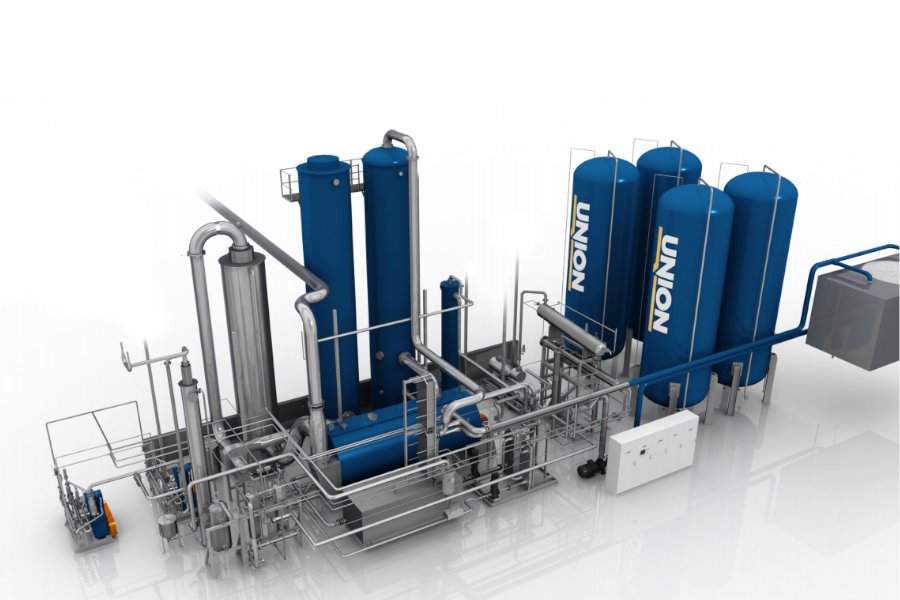
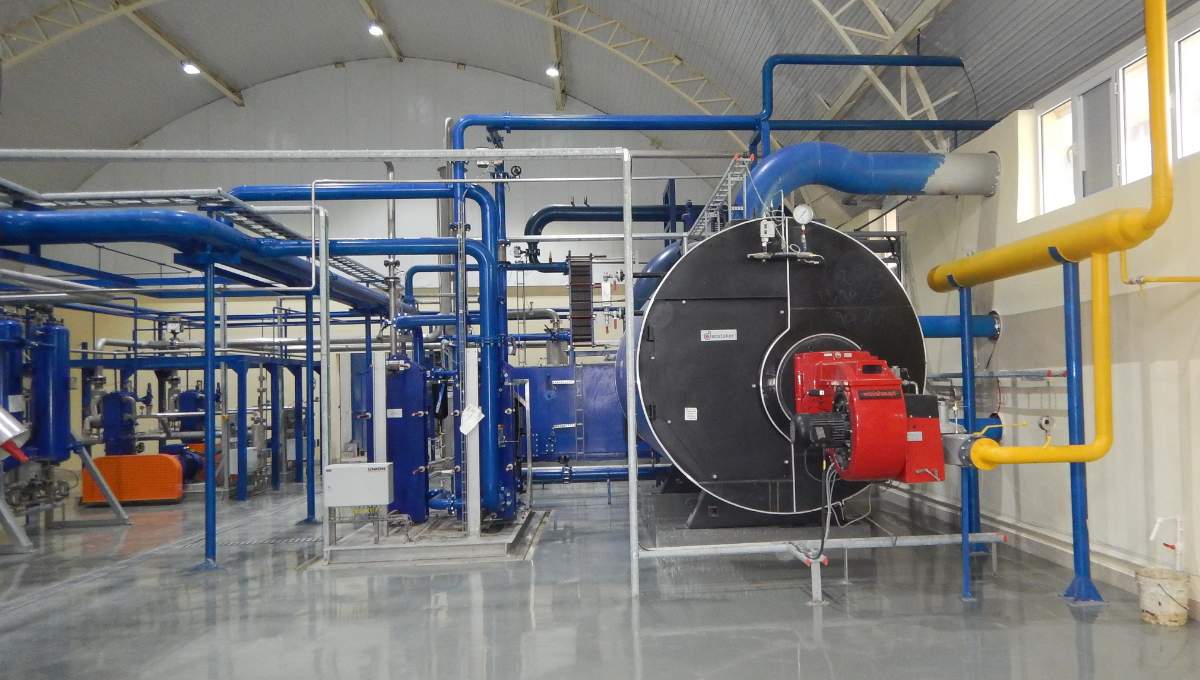
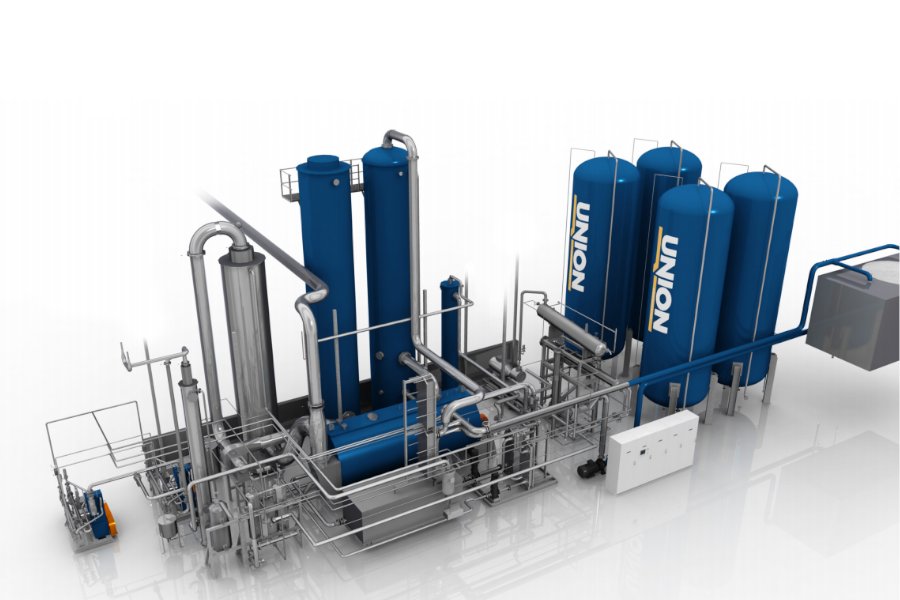
The Union Engineering Combustion-Based Unit (CBU) delivers a dependable source of high-purity carbon dioxide for beverage and food applications. Designed for operations without access to natural CO₂ sources, the CBU converts hydrocarbon fuels into CO₂ through controlled combustion, ensuring consistent quality and supply.
Benefits
- CO₂ Self-Sufficiency: Generate your own CO₂ from widely available fuels, no reliance on external suppliers.
- Ultra-High Purity: Achieve ≥99.999% CO₂ purity, fully compliant with ISBT and EIGA standards.
- Proprietary PUR-D system: Ensures final removal of non-condensable gases for unmatched purity, without additional chemicals.
- Patented NOxFlash Technology: Removes oxygen, NOx, and hydrocarbons without costly chemicals, reducing operating costs.
- Energy-Efficient Design: Integrated heat recovery optimizes energy use and lowers utility expenses.
- Reliable Storage & Temperature Control: Refrigeration system maintains tank pressure and temperature, even during downtime.
- Versatile Fuel Options: Compatible with diesel, natural gas, LPG, LNG, and more for maximum flexibility.
- Proven Technology & Global Support: Backed by decades of Pentair expertise and a worldwide service network.
-
Functional Description
-
The plant is based on the combustion of fuel in an MEA heater equipped with a burner. After the combustion, the flue gas will have a CO2 content of 10-14% v/v and will exit the MEA heater at a temperature of approximately 250 °C. From there, the process follows these steps:
1. Flue Gas Conditioning
Source: Flue gas from combustion of diesel, heavy fuel oil, kerosene, natural gas, LPG, or LNG.
Cooling & Scrubbing: The gas is cooled to condense water and scrubbed to remove impurities.SO₂ Removal: Sodium carbonate (soda ash) is automatically dosed via pH control to neutralize sulfur compounds.2. CO₂ Absorption
The conditioned flue gas enters an absorber column, flowing counter-current to a 9% MEA (monoethanolamine) solution.
The MEA solution chemically binds to CO₂ from the flue gas, creating a rich solution while minimizing corrosion risk.3. Contaminant Removal (NOxFlash)
The rich MEA solution passes through the NOxFlash column, where oxygen, nitrogen, and NOx are removed without using potassium permanganate.
This patented process also reduces benzene and other hydrocarbons, ensuring product safety.4. CO₂ Stripping
Heat from a steam-driven reboiler releases CO₂ from the MEA solution.
The lean MEA is cooled and recycled back to the absorber for continuous operation.5. Gas Polishing & Purification
After-scrubber: Removes any MEA carry-over.
Compression: CO₂ is compressed in two stages to ~15–18 barg.
Drying: Achieves a dew point of −60 °C (≤10 ppm v/v H₂O).
Activated Carbon Filter: Eliminates trace odors and acetaldehyde.6. Final Purification (PUR-D)
CO₂ passes through a distillation column to remove non-condensable gases.
Result: O₂ ≤ 5 ppm (v/v) and CO₂ purity ≥ 99.999% (v/v).7. Liquefaction & Storage
CO₂ is condensed at −27 °C to −21 °C and stored in insulated tanks at ~15–18 barg.
A refrigeration unit maintains temperature and pressure, even during idle periods.
-
Fields of Application
-
- Soft Drink & Beverage Bottling Plants.
- Industrial Gas Suppliers.
- Food Processing & Packaging.
- Chemical Plants.
-
Typical Plant Capacities
-
CO2 generation plant standard sizes (measured as liquid food-grade CO2 produced):
145 kg/h
285 kg/h
500 kg/h
1000 kg/h
1500 kg/h
2000 kg/h.Other sizes are available on request.
DOWNLOADS
| Title | Download PDF | |
| Product leaflet | Union Engineering Combustion Based Unit - CBU | Download |
| Technical documentation | Looking for operating instructions, installation manual, spare part list etc.? | Please, send us your request |
RELATED PRODUCTS
UNION ENGINEERING CO2 EXTRACTION PLANTS FOR BOILER SYSTEMS - EXTRACTION BASED UNIT - EBU
Make a valuable business of imported flue gas from boilers fired with fossil fuels.
The analysis of both commercial and recovered gas - an excellent tool to check the performance of the CO2 Recovery Plant.
PENTAIR UNION ENGINEERING ADVANCED AMINE TECHNOLOGY
CO2 capture technology for low-CO2 concentration sources
NEWS